Five YouTube Habits That Don't Belong in Business Video
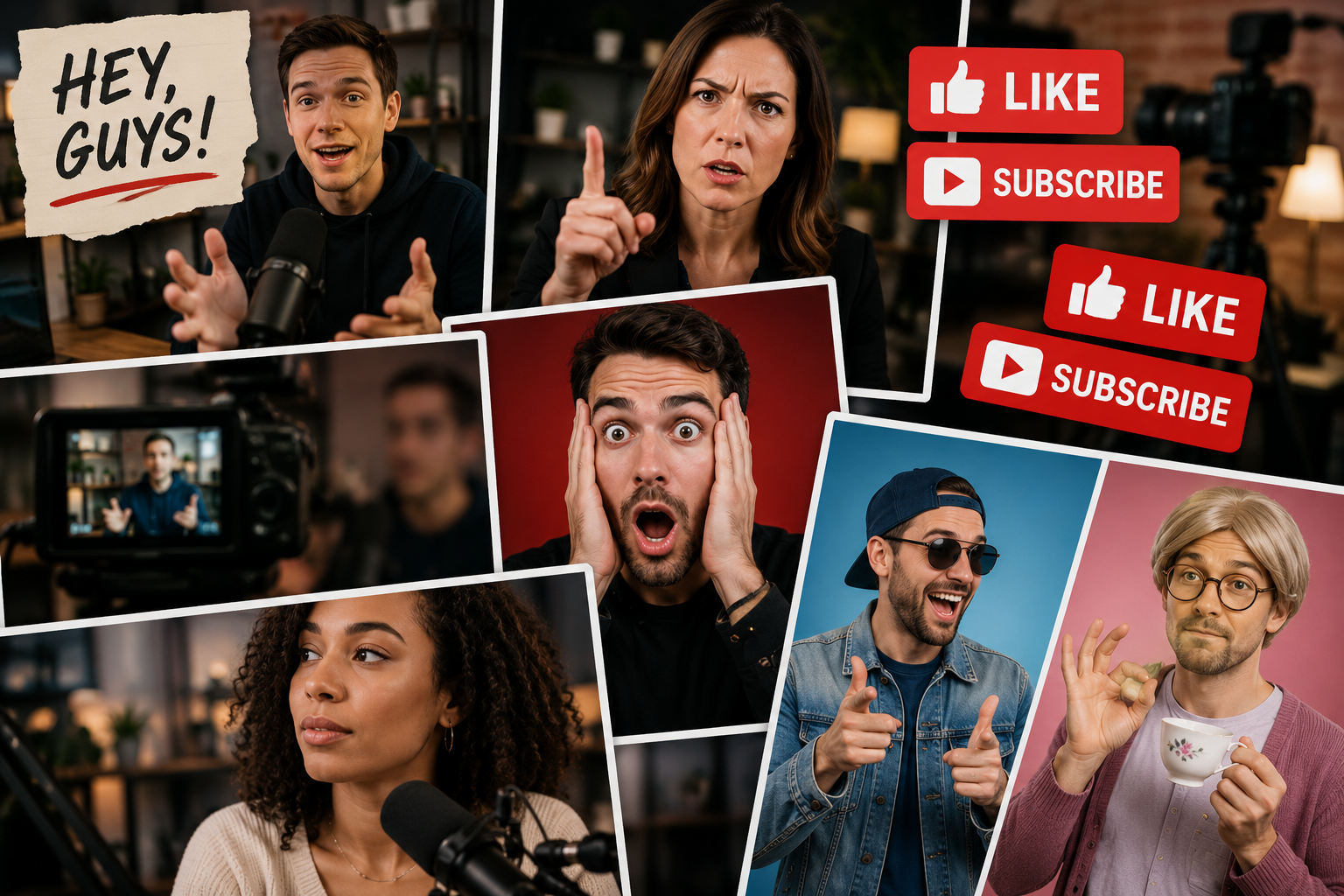
A lot of YouTube 'best practices' aren't best practices. They're just common.
And a lot of that comes down to one thing. We copy what we see other people do, usually without realizing it.
I’m not saying people are intentionally stealing ideas or plagiarizing someone else’s work. However, when we see the same patterns repeated in content over and over, our brains begin to treat them like instructions.
In video content, that might include how others:
Script their videos
Design thumbnails.
Ask for engagement.
Talk to the camera.
And before long, we start thinking, “Well, I guess that’s how it's done, and that's what I'll do.”
Repetition creates the impression that “this must work,” so we imitate it without stopping to question whether it’s actually effective or simply familiar. What's worse is when some of these repeated content creation habits hang around for years, and nobody bats an eye.
It becomes so automatic, we don't even realize how much time has passed. Meanwhile, as more of the same floods your audience's screens, they're thinking:
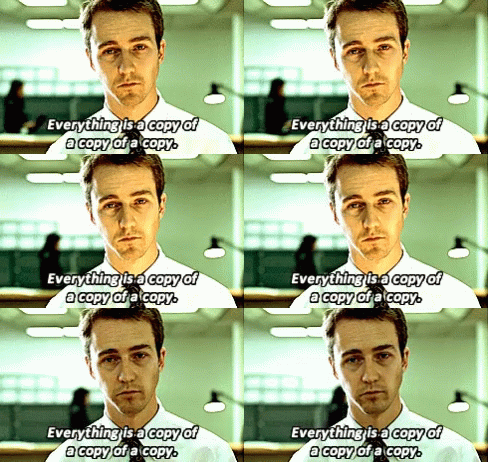
As they realize how long they keep seeing the same stuff, their attitudes sour in ways that can hurt your content and its ability to connect with them. Let's take a closer look at some of the habits you should completely avoid because they're really old or they could generate some of the worst responses from your audience.
They are:
Using generic introductions and AI-sounding scripts
Communicating in stern expert tones
Asking for likes and subscriptions instead of earning them
Making exaggerated or shocked-face thumbnails
Incorporating camera angles, skits, and creator bits that distract from the point
By avoiding these common video traits, you put your video content in a better position to make a better impression and connection with your audience. Let's take a closer look at what to avoid.
Using generic introductions and AI-sounding scripts
I'm sure you've noticed how much people are looking for examples of AI and "AI slop" today. It's not just limited to visuals, but also language. When they see or hear it, they disengage or call it out.
It's almost a way of proving you can't fool them.

Whether they see it or hear it, there is usually a negative response associated with it. Don't assume people won't notice it - no matter where you're using it.
For example, Mark Schaefer said he's noticing podcast hosts are reading the same AI-generated questions when they interview him.
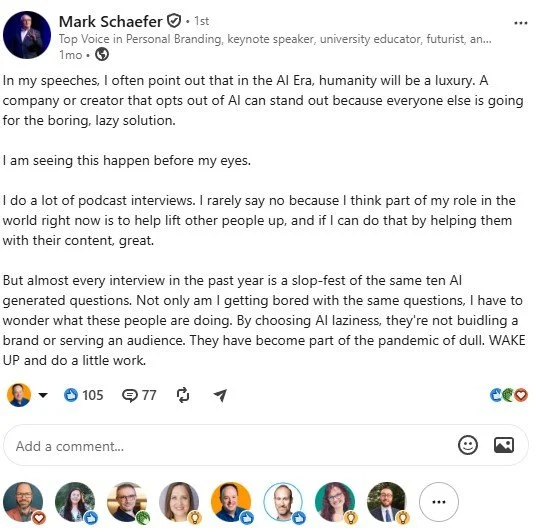
This means they can also hear the words commonly associated with AI.
I tend to hear them in the way people script their video content. For example, it might open with someone saying phrases like:
In today's content landscape...
Unlock the secrets to… Leverage the power of… Explore the key strategies…
Even if AI did not write it, overly polished scripting can create that same negative response. The language has a defined structure, but it does not sound like the person.
You can also hear generic or repetitive scripting in the way people open videos. One of the most commonly used phrases people use to open videos is:
"HEY, GUYS!"
👉 Here's a simple but powerful tip:
Want to make a connection? Talk to the one viewer. Not everyone.
"Hey, guys" is not only copied by endless amounts of people, it's usually followed by words that provide no real value.
For example:
"Welcome back to my channel" (when they know they're on your channel)
"Today's video is about..." (They know what it's about. That's why they clicked on it.)
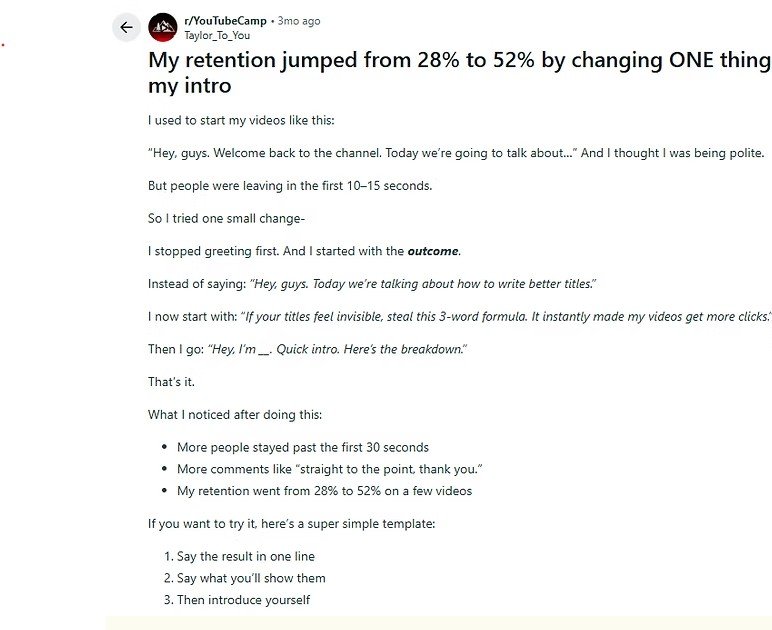
This has been going on long enough that you can find plenty of advice on how to write a better video intro.
Communicating in stern expert tones
I’ve been involved in content production (TV, radio, and digital content) for more than 20 years. When I’ve coached first-timers and veteran on-air talent, we'll occasionally work on things like tone.
➡️ Sometimes it’s word choice. Sometimes it’s delivery. Sometimes it’s both.
I also watch a lot of video content as part of my work, but also as a way to learn from others. There are plenty of smart, insightful people out there, and I have my favorites just like everyone else.
But sometimes I’ll be watching a video because I genuinely want guidance, an answer, or a different perspective on something, and suddenly I snap out of learner mode and start thinking, "Why does this feel like they’re trying so hard to sound authoritative?”
This is especially true when it comes to tone.
I don’t usually think it’s because the person is rude or arrogant. I think it often comes from the pressure people put on themselves to be taken seriously as experts, thought leaders, consultants, coaches, or whatever label fits what they do.
They want to sound confident.
That’s one reason I have an issue with the phrase “confidence on camera.” Once we start thinking, “I need to sound like an expert,” or “I need to show people I know what I’m talking about,” we can accidentally make the video too much about ourselves.
In videos like these, word choice and tone can be a double whammy.
You'll hear a lot of “you need to do this,” “you have to stop doing that,” “if you’re serious about this, you need to…” and other language that may be intended to sound direct, but can come across like scolding.
It might sound a bit like this:
It can sound like the viewer is a kid who got in trouble, not a business owner or professional trying to think through a problem.
Instead of working on how you're coming across (and if it's authoritative, polished, etc.), try to focus on naturally helping the person on the other side of the camera. That can change both the tone and the word choices.
"Must Language" and Psychological Reactance
Speaking of word choice, a study on social-norm messaging found that “must” language creates a more perceived freedom threat and psychological reactance than softer language. That does not mean that every “you need to” phrase in a business video creates the same reaction, but it supports the larger point: forceful, controlling language can make people feel pushed instead of helped.
Psychological reactance research shows that when people feel like a message threatens their freedom or autonomy, they can resist the message instead of accepting it. Research on controlling language points to examples like “you must” and other forceful phrases as language that can increase that sense of threat.
That does not mean you can never be direct. Sometimes direct is good. Sometimes people need a clear point of view. But there is a difference between being clear and talking like you have everything figured out while the viewer is sitting there waiting to be corrected.
I see successful people who share strong advice make this mistake. But if the first video someone sees from them is a stern one, like the kind where they are passionately telling people what they need to start doing or stop doing, I do think it can rub some people the wrong way.
The frustrating part is that it is not necessary.
You can still have a strong point of view. You can still challenge someone. You can still say, “I think this is a problem.” But you can frame it in a way that feels more like help and less like correction.
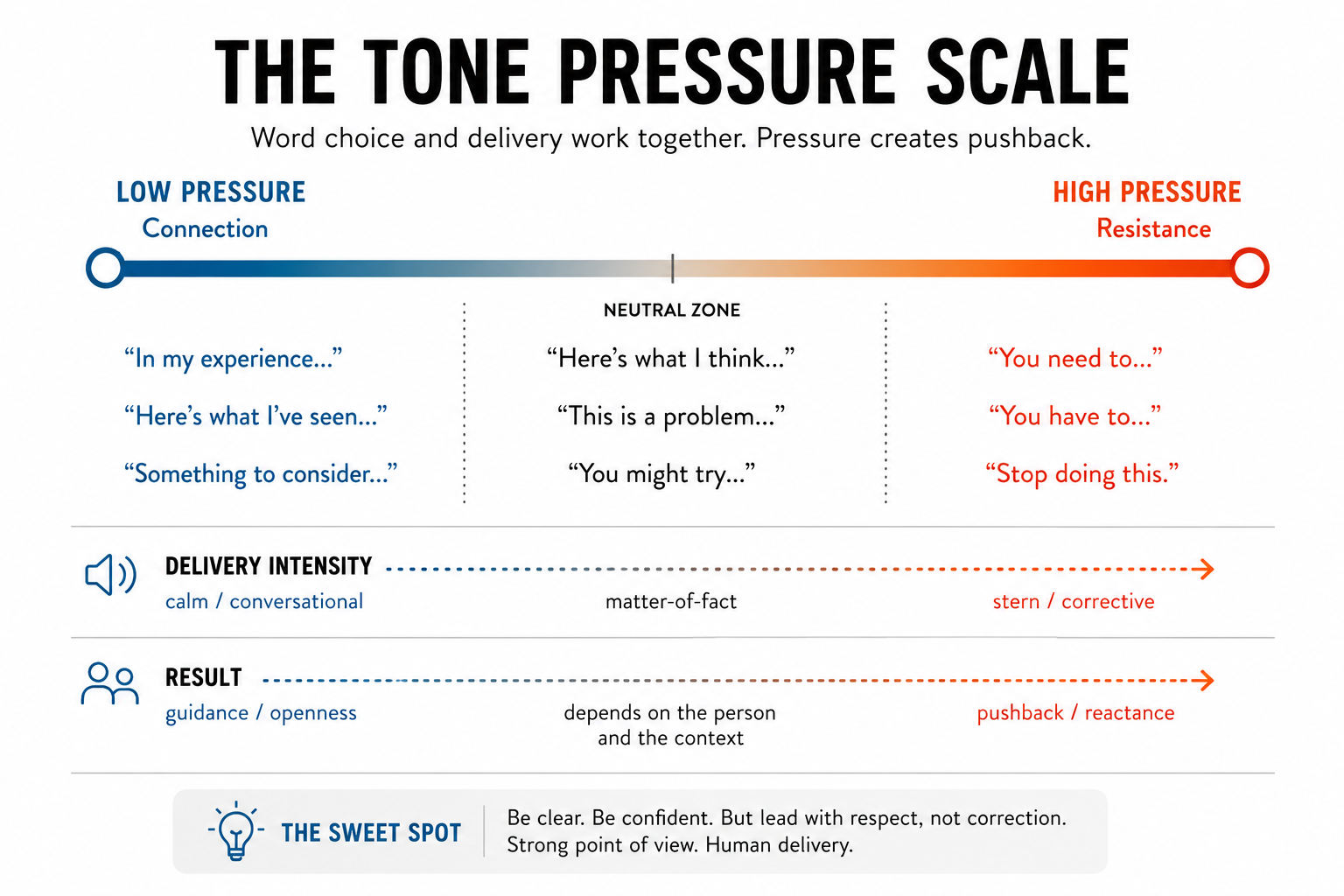
Instead of making the viewer feel like they are being talked down to, you can bring them into what you have seen, what you have learned, or what your experience tells you. Something as simple as “In my experience, this tends to work better because…” feels different from “You need to stop doing this.”
That may seem like a small shift, but small shifts matter on video because the viewer is experiencing your tone, your face, your pacing, your word choices, and your intent all at once.
A good test is to imagine the person sitting across from you at a conference, in a meeting, or on a call. Would you say it to them the same way? Would you use the same stern tone? Would you keep saying “you need to” and “you have to” if you could see their face while you were saying it?
Because on video, you are still saying it to someone’s face. You just can’t see them.
Asking people to like and subscribe before earning it
🙏 Please stop telling people to like and subscribe before you have given them what they came for. The message you might as well send is, “Before I give you what you want, do something for me.”
I have compared this before to a film director standing outside a movie theater and asking people to leave a positive review before they walk in and watch the movie. The person has not experienced anything yet, but they are already being asked to help the creator.
While the same idea applies here, I think it's important to consider that in 2026 it's reasonable to assume that most people on YouTube know they can like a video and subscribe to a channel.
They don't need to be told to do it.
That is why it can feel cringey when someone says, “Hit that like button,” or “Make sure you subscribe,” especially before anything meaningful has happened.
👉 When it comes to any action we take (when we're on the audience side), we would rather content earn our responses.
And we're left to wonder why someone is asking for this up front. It's likely one of two things:
Insecurity - Maybe worried it's not good enough to earn a like/subscribe
Best practice - Focused on what you're "supposed to say" without considering audience reactions
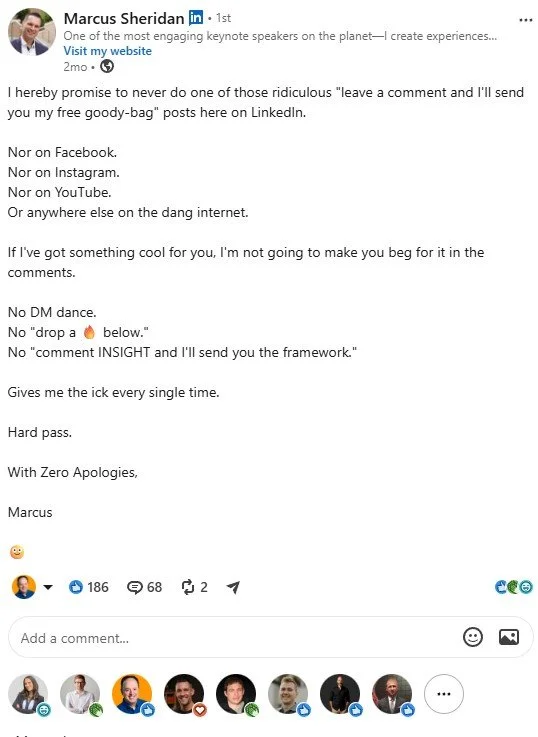
The value of earning response is not a new concept. For example, take LinkedIn, where the platform has pushed back against posts that ask people to like, comment, or share. The reason is pretty simple. Platforms want those actions to happen because someone genuinely wants to do them, not because the creator told them to.
To be fair, video isn't the only type of content that implies the creator or brand wants something from you first. Gated content and the "comment/DM me to get something good" tactics are also interpreted that way.
While asking for something up front is not ideal, I do not have a problem with a small graphic that pops up during the video. That is different. But verbally stopping to ask for the like or subscription, especially early, is something I would seriously reconsider.
Exaggerated shocked-face thumbnails
I have to be honest with you here...
While I often point out the ways we can get into common habits of copying or repeating things and not realize it, I do not understand why this is still so common in video content.
It is so old, so overdone, and so unnecessary.
So old, it's not even hard for exasperated audiences to realize people are doing it because everyone else is doing it. Also because they know it's an attention tactic - which makes it worse. It falls into that whole "inauthentic" thing.
Like “like and subscribe,” this is something that probably made more sense when YouTube and video content felt newer. But at this point, it has worn out its welcome for a lot of people.
You know the thumbnail I’m talking about. The wide eyes. The open mouth. The exaggerated look of surprise. The face that says, “I can’t believe this happened,” even though everyone knows they probably were not actually that shocked. They often look fake, forced, or exaggerated, and nobody's thinking about your shock anymore.
I also think this is especially risky for business video. If you are trying to be taken seriously, build trust, or create a meaningful connection, an exaggerated facial expression may send the wrong signal before the video even starts.
Sometimes I get on YouTube, and it's like the whole page looks like this:
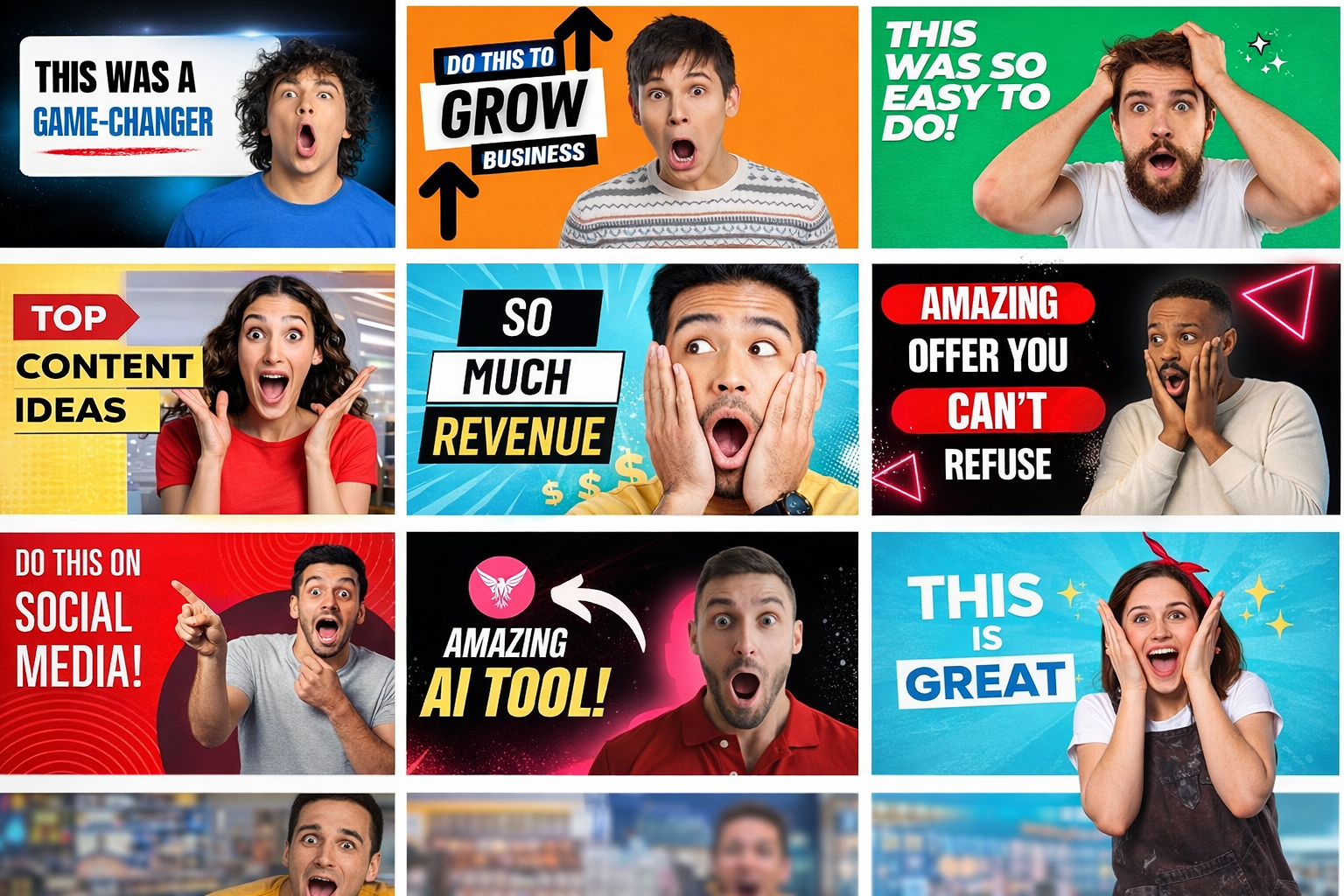
It's all people copying the same tactic. In everyday conversations with others, we're rarely THIS SHOCKED about anything. So, be real. And in this case, be different.
That does not mean thumbnails have to be boring. There are plenty of people getting strong engagement with thought leadership and business video without making the same exaggerated face that has been used a billion times. But the thumbnail should create interest without making the audience feel like you are trying to manipulate them into clicking.
Incorporating common ideas that distract from the point
Exaggerated faces on thumbnails aren't the only risky trend. Here are a few others.
One example is the skit where the creator plays all of the roles. Most people will probably say it works if the writing is effective or if the content is funny. Funny is hard. Effective writing depends on the context. In other words, is this topic actually skit-worthy?
The other thing that becomes problematic is when someone becomes too reliant on attention gimmicks on a platform like LinkedIn.
I used to follow a very smart expert on LinkedIn, but I eventually got tired of seeing the skit format over and over again. I couldn’t take it anymore.
So if it works for you, I recommend picking your spots.
The last thing I would put under this larger category is copying production choices without asking what they communicate - like the off-camera interview look.
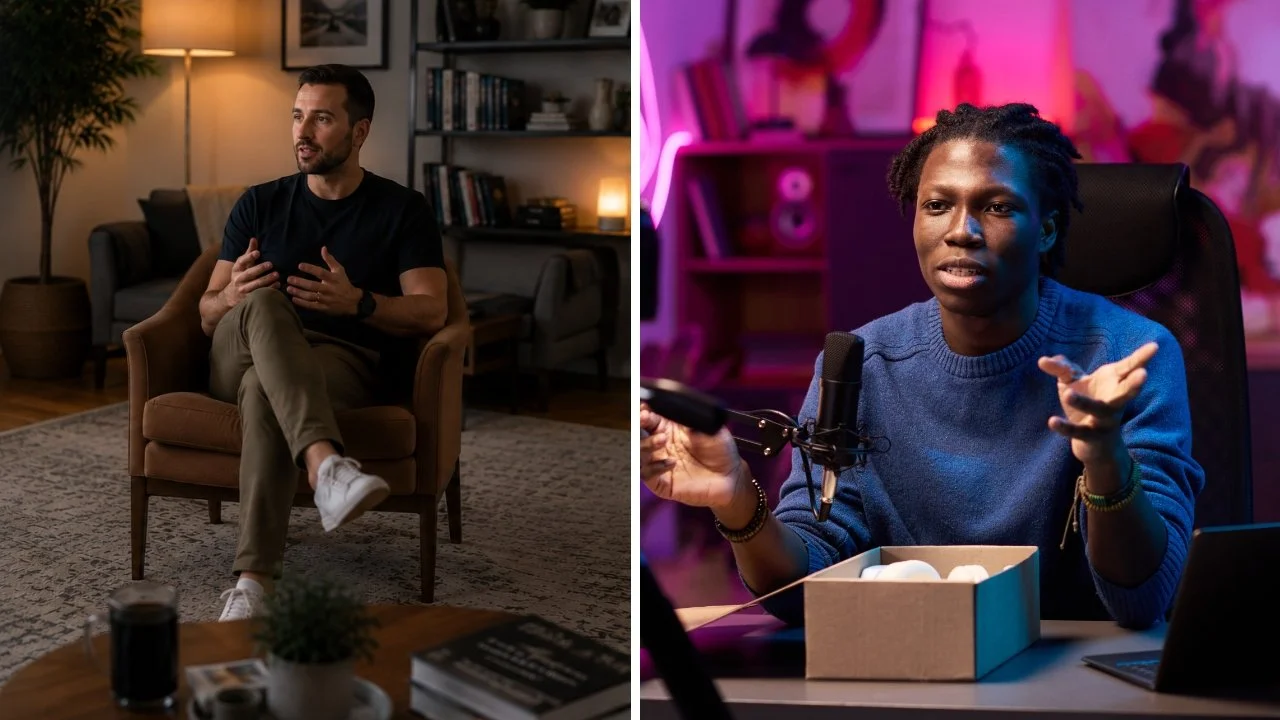
There are times when it makes sense for someone to look away from the camera. If you are actually being interviewed, that is normal. In broadcast and documentary production, that is how many interviews are traditionally shot. The interviewer sits next to the camera, and the interviewee looks at the interviewer instead of directly into the lens.
👉 That setup exists for a reason: looking at a real person off to the side helps someone who isn't used to being on camera feel more comfortable and relaxed.
But that does not automatically mean it works in every business or thought leadership video. If the goal is to connect with one viewer, research shows you're more likely to make a good first impression, generate more trust and likability when you look at the camera.
All the more reason not to ditch that approach for the wrong reasons.
Yet, I keep seeing clips where the person is plainly running their own content, yet they're looking off to the side while the camera sits at an angle, as if to borrow the feel of an interview. In some cases, the camera and talent are pointed in two entirely different directions.
If they're not being interviewed, what is the point? To copy someone else? To give the impression of an interview (therefore creating an impression of authority)?
What if your audience is asking, "Who are they talking to?" instead of listening to your point?

If they're looking way off camera, it's really awkward. Are we eavesdropping on a conversation or are they talking to me?
But if it's a real interview, I think it works. I find that if the words sound presentational, heavily scripted, or written in a marketing style, I'm less likely to believe it's an interview. That's when I wonder if they're trying to fool me. If someone is telling a story or they sound conversational, there are fewer red flags.
Again, not saying it's always bad. Just consider why you're doing it and the ways your audience might respond.
Give yourself time to pause before you record
When one of these tactics pops up in your head, it's worth asking why.
"What made me think of this, and why do I want to use it?"
Is it strictly focused on your interests or are you thinking about audience response and experience as well? After all, their experience is probably a lot like yours.
You've seen shocked faces everywhere.
You've seen content ask for something up front.
You've heard "Hey guys" when nobody else is in the room with you.
At a time when people just want you to be you, there's even less reason to copy what others have been doing. They haven't snapped out of it yet. You can, and that helps you stand out and make a connection with that one viewer.
If you're trying to make video that sounds like you instead of everyone else, that's what I do.