Why "On-Camera Confidence" Is the Wrong Goal (And What's Better)
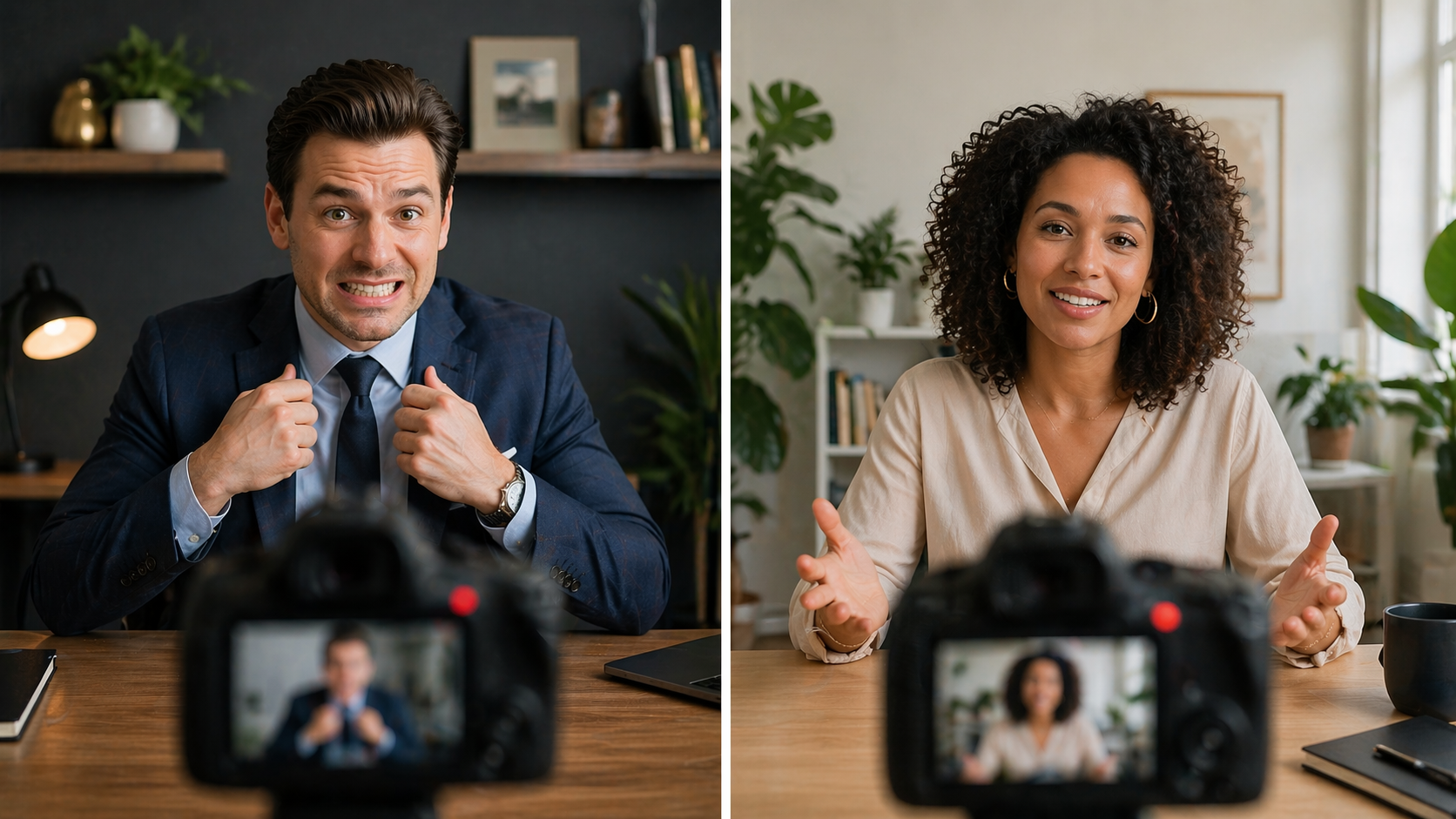
The more I hear people talk about confidence on camera, the more I think we're making video harder than it needs to be. In my experience, confidence has little to no relevance in creating videos for your business.
It creates a stigma around taking advantage of a content format that allows your audience to experience the human behind the brand. They can hear your voice, see your personality, and form a connection that text alone often struggles to create.
How do you teach "confidence" anyway?
In my experience working with everyone from first-time creators to experienced executives, the challenge usually centers around comfort. If you're someone who is struggling to create video content or hesitating to get started, achieving comfort probably sounds more like a reasonable goal
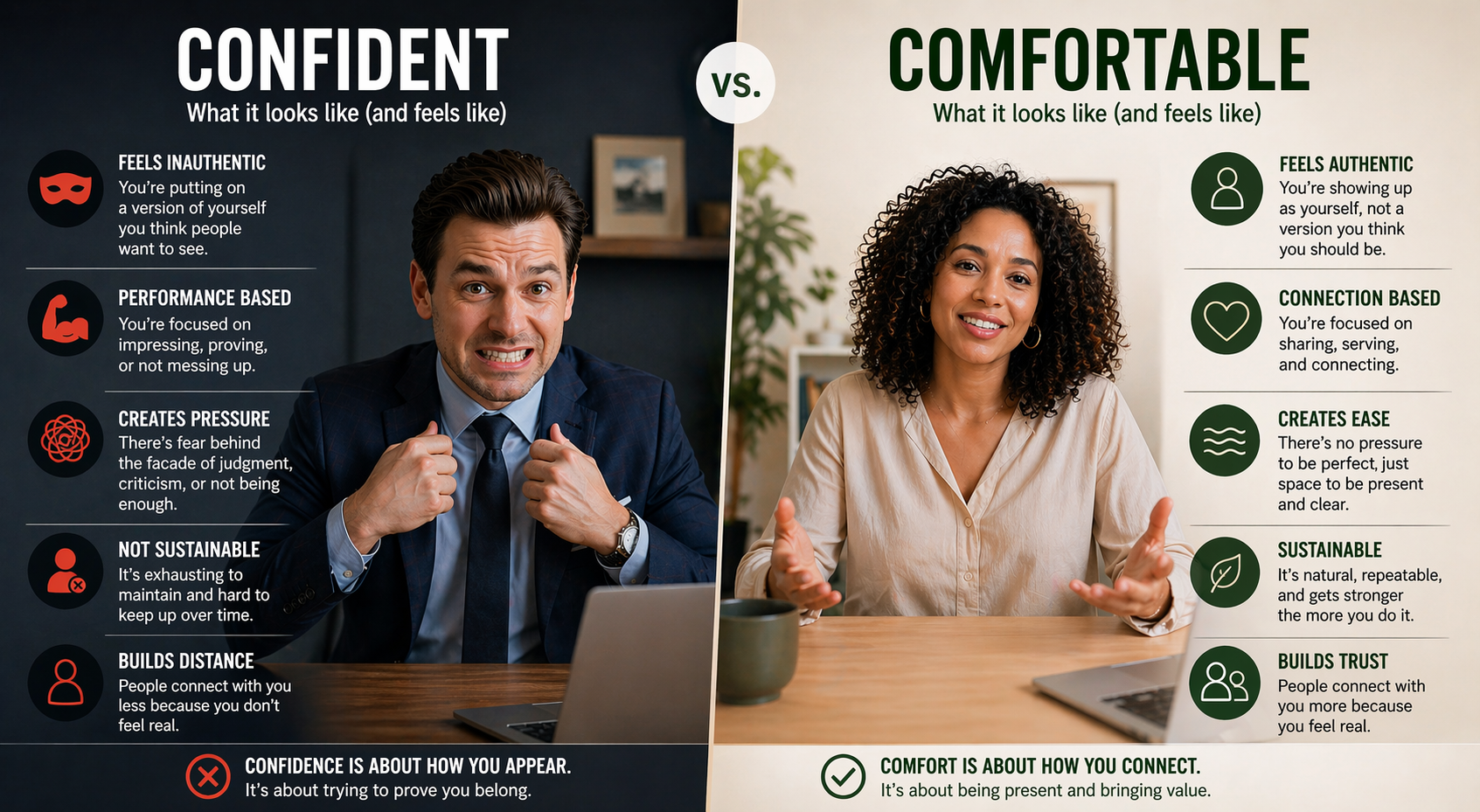
CONFIDENT VS. COMFORTABLE
Confidence often puts the spotlight on you. Comfort puts the spotlight on the audience. One is focused on performance, appearance, and getting everything right. The other is focused on being present, sharing value, and building a genuine connection. That's one reason I believe comfort is not only more attainable, but often more effective.
The Myth of Being "Good" on Camera
The discomfort with being on camera generally comes from a sensationalized view of what it means to be on camera. This comes from seeing big-name polished professionals on the small and big screens all the time.
Those people tend to have rich backgrounds and experience in TV or film. That makes sense, but here's what you have to remember:
👉 You're not on camera for the same reasons or the same audience.
More importantly, that audience isn't viewing you like they do those polished big names. They understand the difference. You should too.
The camera you're using is meant for a totally different purpose. It's a modern and powerful way to connect with your customers, prospects, and stakeholders. It hasn't always been available, and not taking advantage of it today is a missed opportunity.
So, start with rethinking how you view your camera or just being "on camera." It's not a production or presentation where you have to "perform" or do a variety of things perfectly.
The camera is nothing more than a portal between you and one other person who needs your help. With that in mind, here is a framework to help you find your comfort zone on camera.
Since this is about communicating and connecting with another person, let's label this framework as TALK.
T = Treat the Camera as a Person
If you've ever talked to a customer, prospect, or stakeholder in other settings (conference, in-person meeting, or even a video call), let that experience shape how you view the camera.
It's the same situation.
It's just that the camera is how you're connecting with that other person. The challenge is that many knowledgeable leaders become so focused on the performative aspects of being on camera that it changes how they share their expertise.
It should be about getting comfortable talking naturally about insights, expertise, and advice for the camera.
For one client:
I asked him to share the questions he encountered most often in his work.
I took those questions and built a conversation around them.
Instead of interviewing him like a podcast guest, I asked follow-up questions as if I were a prospect trying to understand the topic and determine what I needed to know.
That change in context allowed him to discuss his expertise in a much more natural way. When I later removed my questions from the recording, we had several videos of him naturally talking to the viewer.
The results were significant enough that the approach evolved into a broader content strategy, which you can read about in this case study.
Some experts say think about talking to your best friend or someone who needs your help.
A = Activate the Skills You Already Have
I recently worked with a client who told me all of the big-name personalities he wanted to emulate in his on-camera content. While those people are great, I suggested he focus on his own style because the qualities that make him different are also the qualities that make him valuable.
When we started working together, we recorded a session where I just asked him questions about his passion and goals. When he responded naturally and in a very conversational manner, it was gold. He had no idea just how well that would come across on camera.
He was clear, thoughtful, and had his own unique way of explaining things. He didn't need me to work on that.
From there, we worked on other aspects of his on-camera presence, like organizing what he wanted to say, recording practice sessions, evaluating content from both a comfort and audience perspective.
But after realizing he already brought value to the table, the pressure to perform or "get everything right" faded away.
I see this a lot.
It's easy to think you have to have all of these special skills to be "good" on camera. However, there is a lot of nuance in how founders, leaders, and others naturally speak.
For example:
Everyone has their own unique ways to frame challenges and solutions.
Some people bring intangibles that help them stand out, like humor.
Some have such deep knowledge that you can't help but stay engaged.
Nobody steps into their first recording session with nothing to offer, but those unique attributes or talents get lost when people focus on unnecessary concerns or pressures.
L = Lose the Performance Instinct
Being your natural self is vital because people want real and relatable people, especially if it's someone they may reach out to for help or guidance. At a time when AI and other tools can perfectly polish everything, audiences are left searching for less polish in a human-to-human context.
At the same time, the drive to sound knowledgeable, confident, persuasive, or authoritative can turn an on-camera presence into something too performative. One example of this is what I call expert tone.
When people pressure themselves to sound like the expert on camera, it can create an exaggerated authoritative scolding-like tone that can be off-putting. I don't think people mean to sound that way, but they don't realize it.
To me, one of the most unnatural things people do on-camera is turn their words into a broadcast performance. In other words, they use what's known as broadcast diction. It's easy to fall into this presentational (and sometimes over-the-top) style simply by believing this is the way you should talk on camera.
It can sound something like this:
Aside from sounding unnatural, it's also not how you're going to sound (hopefully) if someone reaches out to you. So, drop the performance approach and be yourself.
A focus on performance also puts on the pressure to make your videos look and sound perfect. But remember - people are okay with imperfections. Nobody talks perfectly in person-to-person conversations.
My friend and colleague Kristin Quiroz Bayona talks to thought leaders about a willingness to show imperfections and vulnerabilities in content because it makes them relatable. That can be anything from saying a few "ums" and "uhs" to sharing a story where they struggled with something and learned from it.
K = Keep the One Viewer at the Center
If you've spent any amount of time on YouTube in recent years, you've likely seen several things repeated over and over again from one creator to the next. Much of this happens because people see other people do or say things and then copy it.
One of the most exhaustive examples of this is how so many people open up their video with, "HEY GUYS!"
This instantly disrupts opportunities to make a deeper connection with the one viewer watching at that time. That viewer feels like just one of many others. It makes them less important.
Ironically, the tendency to do this also comes from some of our impressions of television. It creates a broadcasting mindset that you shouldn't have if you're wanting to make a connection with the right person.
If you think about talking to one member of your audience who is watching, it changes everything. You'll find that it also changes what you say and how you say it.
That's a good thing.
Throughout my career, I've worked with actors and broadcasters on their on-camera performance, as well as founders and executives on their on-mic and on-camera presence for business-related content. They're different in many ways, but the two most important differences for businesses and personal brands are:
You don't have to have a polished "performance"
Your audience doesn't expect you to provide them with one
That's why this isn't about confidence. If you weren't confident in your knowledge or business, you wouldn't be in your industry. You simply have to tap into a way to be comfortable as you take advantage of the opportunities video provides you to make meaningful connections with your audience.
If you've been putting off video because being on camera feels unnatural, you're not alone.