
Every Part of Your Podcast Communicates a Message
Format, scripting, creativity, and on-air presence are how a show stands out and builds a real relationship with the people listening.
Your podcast is sending a message before you say a word.
Do you sound like too many other business podcasts?
Does your production quality suggest you’re not serious about value?
Does the audience believe you made this for them?
Does that one listener feel connected to you?

You can’t clear those barriers with just another podcast.
Many businesses worry their show will blend in or that listeners won't care. If it sounds like many others or doesn't sound like you, that worry can become a reality very fast.
To avoid that, we’ll focus on standing out and connecting with the people listening. That means concentrating on critical elements of:
Format and structure
Creative and production elements
On-mic and interview coaching
Audience response
Other podcasts in your industry
Before podcasting, I learned how to make audio that moves people
I've been podcasting since 2011. But the foundation came earlier.
For over three years, I worked at a major market public radio station, where writing, production, and storytelling have to be high quality. I was an on-air fundraising producer responsible for improving the strategy, messaging and content around fundraising drives.
This meant rebuilding the content, messaging, and strategy while coaching new and veteran on-air talent.
The outcomes included record-breaking fundraising results, positive listener feedback and shorter drives. I later took that passion and dedication to podcasting and content marketing.
“Scott Murray is one of the most professional, polished, and informed members of the podcasting world that I have had the pleasure of working with. His organization and planning are top-notch, as is his knowledge of media, both behind-the-scenes, as well as on the microphone and on camera. He would be an asset to any company!”

Dan Zehr
Host & Brand Director of Coffee With Kenobi; Educator; Author, Speaker
Defining Format, Scripting, Creativity, and On-Air Presence
Many business podcasts end up sounding surprisingly similar. That's why we'll focus on the elements that help your show stand out and create a stronger connection with the people listening.
Format and Creativity
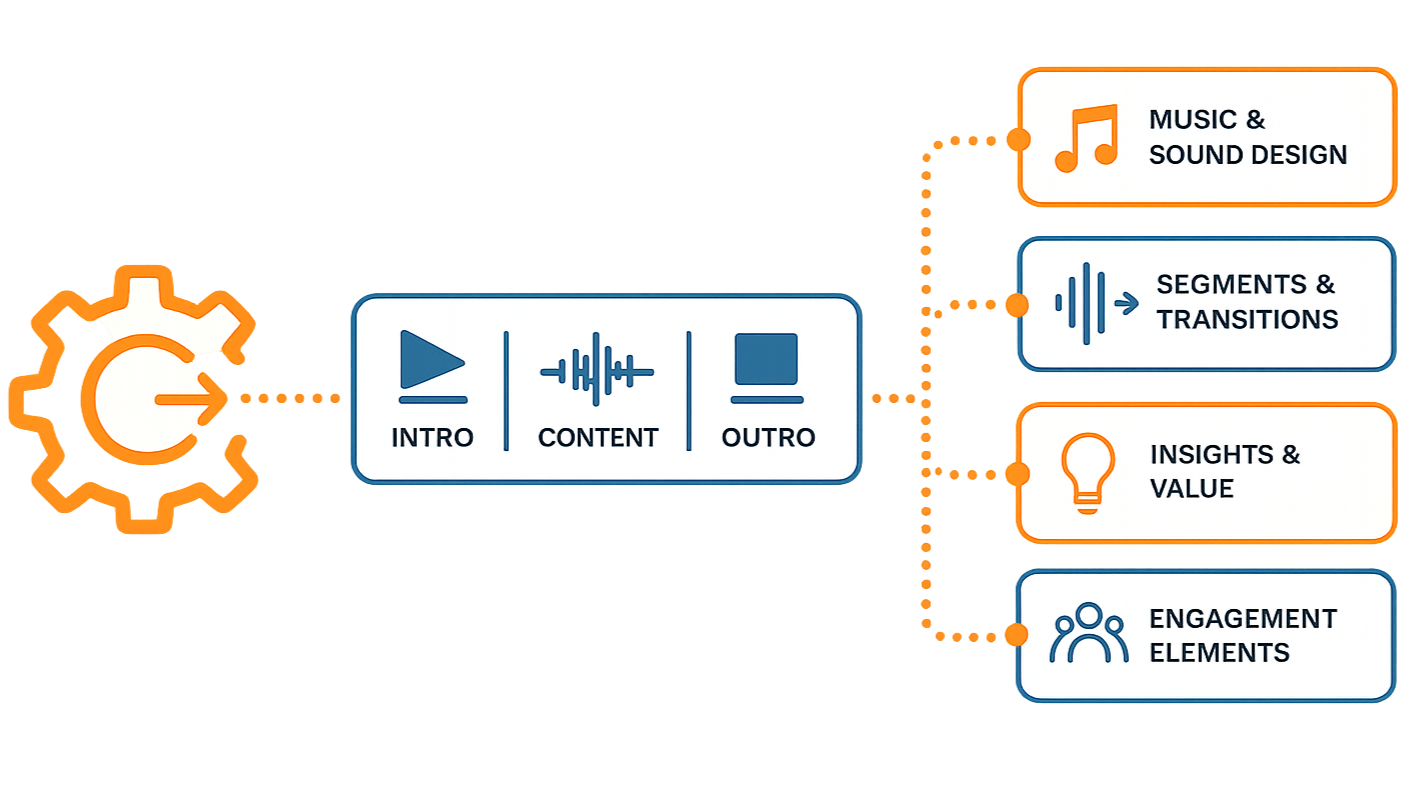
Business podcasts often rely on the same formats, which makes many shows feel interchangeable. Over the years, I've developed and adapted format ideas that help podcasts stand out, create a better listener experience, and build stronger audience connections. Here are a few examples:
Breakaway Insights - Impactful moments where the host steps out of the conversation to add perspective and commentary
Immersive Stories - Explaining topics through immersive stories using voice talent, script, sound effects, and music
Listener Hooks - Segments that get listeners reacting, like a quiz or game-show element
Concept Development - shaping the core idea and identity of the show, so it's something distinct, not just another podcast in the category.
Interview Narration - Reshaping Q&As by pulling the best moments and presenting them with music, insights, and sounds
Audio Flare - I've added pop-culture drops and sound accents to give a segment personality
Intro Mystery - Part of the show intro that changes every time in creative ways (that audiences anticipate)
Title Development - a title that's clear about what the show is, interesting enough to stand out, and not easily confused with similar ones.
Scripting
I've written audio and video scripts for executives, broadcasters, and business leaders for years. One of the most important parts of that work is understanding how someone naturally communicates, then building a script that supports it instead of replacing it. Podcasting is no different. Here are a few approaches we can take:
Fully Scripted - If a full script is best for you, we’ll not only shape it around your voice but work on a delivery that sounds conversational (not like you’re reading)
Extemporaneous Style - This is a list of topics or thoughts you follow, but you speak naturally without reading a script.
Hybrid Approach - You can also mix both styles into one episode, fully scripting the parts that need it the most.
Keeping Your Voice on the Page - Scripting that sounds like you, not generic, especially in the moments that matter most.
On-Air Presence

Your on-air presence plays a major role in how listeners experience your podcast. It shapes how natural your conversations feel, how your personality comes across, and how easily listeners connect with you as the host. Through years of working on both sides of the microphone, I've developed a process that helps people strengthen their on-air presence while staying true to their own communication style, including:
Finding Your Style - Building delivery around your strengths, so the show sounds like you and connects with the listener
Getting Comfortable at the Mic - I believe in finding comfort behind the mic (instead of obsessing over confidence), and it helps people be themselves
Polish Versus Personable - Finding the balance between sounding good and sounding human
Interviewing Strategy - Become known as a great interviewer through proven strategies for asking good questions that earn respect from your guest and rapport with your listener.
Interviewing is Its Own Skill
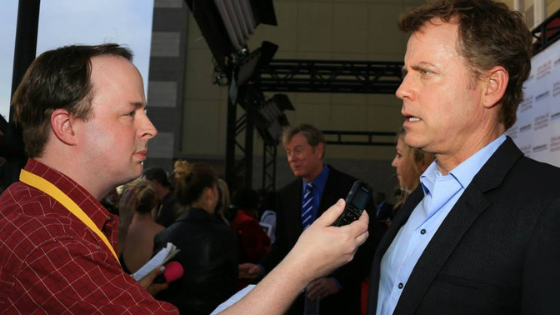
If interviews are going to be part of your podcast, they should be treated as one of your greatest opportunities to differentiate your show. That's especially important because so many interviews end up feeling repetitive and one-dimensional.
As a result:
Popular guests cut back on granting interviews
Podcast listeners demand better questions
Listeners often leave without learning anything memorable
Interviewing takes practice and benefits from thoughtful preparation, active listening, strong communication, and a style that's uniquely your own.
Greg Kinnear was one of several celebrities I interviewed as a podcast host. Opportunities like this were earned by building a reputation as a prepared and professional interviewer.
With a background in media and more than 100 interviews, including celebrities, authors, and business leaders, I know the difference comes down to caring about the people on both ends. The listener can tell when a question is shallow, and so can the guest, whether they've done a hundred interviews or their first. So I do the work to ask something better. That built a real reputation with guests and their reps, and listeners said they noticed the difference.
This is a huge value to a podcast, and I enjoy helping podcasters become better interviewers.
From Webinar to Engaging Podcast
After attempting to share webinar audio on a podcast feed, a tax firm decided to turn the content into more of an engaging show and a podcast model that better served the business and their audience.

“Scott is a great resource and thought leader when it comes to podcasts. He helped us figure out our podcast strategy for our tax firm. I would recommend working with him."
Miguel Alexander Centeno
Founder, Chief Tax Strategist at Centurion Firm

How We Can Work Together
This is collaborative work focused on helping you build a podcast with a stronger concept, clearer structure, and a better listener experience. Whether you plan to keep producing it yourself or bring in production help later, you’ll know what your show actually needs and how to move forward.
Launching Your Show
Concept, format, title, positioning, episode structure, on-mic coaching, and launch strategy.
Improving Your Show
Show audit, differentiation strategy, format refinement, and on-mic presence coaching.
See (or Hear) It For Yourself
A focused $750 session to look at where you are, rework something together, and see the difference for yourself before deciding anything else.
Start with a conversation.
Whether you're starting from scratch, trying to improve what you already have, or simply figuring out what comes next, we'll talk through your goals and determine what makes the most sense.