AI Didn’t Break Content - It Exposed How Little We Think About the Audience
- Scott Murray
- Feb 21
- 4 min read

Updated: Mar 27

Last year, I was invited to speak at a conference about humanizing content using STAMP. I arrived a day early and noticed several sessions on AI.
I thought, "Do I belong here?"
I sat through one session where the speaker excitedly bragged about how quickly his company churned out videos using AI.
Then he showed us an example.
It was a "promo" featuring a lot of AI-generated imagery that could also be confused with stock video, and a voiceover that sounded like this:
As someone who has been producing video content for a long time, I was stunned at how proud he was of it. However, I started to feel better about my upcoming presentation when someone in the audience asked how the target audience would respond if they knew it was AI.
At the same conference, I spoke with a brilliant, knowledgeable AI expert. He was talking about all the exciting things companies will be able to do using AI to create content.
It was going to do all this stuff really fast for businesses. Everything was going to be so easy, automatic and incredible - so much so, there wouldn't even have to be much care about it.
👉🏻 But I then asked about the people on the other side - consumers, stakeholders, potential buyers. Did they CARE about whether this AI-constructed content would resonate with them?
He stopped, thought for a moment, and said, "Well, ideally they would."
In other words - "Well, yeah, hopefully there's that, but there's no guarantee."
That was then. Since then, I've continuously seen humans on social media call out everything that looks AI.

Every callout is basically the consumer saying:
"I see what you're doing, and I don't like it!"
"I hope you're not thinking I'm fooled by this - I'm not!"
"Lazy!"
"Glad you think this is cool - but not interested!"
Deep down, if we start thinking more about what our audience might think (not just us), this shouldn't surprise us, right?

And Lily Ray makes a good point. When marketers are at work in their "marketing" mindsets, they are capable of creating content they would never engage with at home in a "consumer mindset. AI can add another layer to that.
However, I also started to see big brands create content with a label telling the audience:
"HEY! We didn't do ANY of this with AI! Heh? See? We did this with real people. Promise. We did! Pinky swear! Seriously, we did. Like it? You do right? Because it's not all AI? It's all us."
Like Apple letting everyone know that no machines were used to make a logo intro:
When Aerie created its "NO-AI used" content, it became its most popular Instagram post in a year.
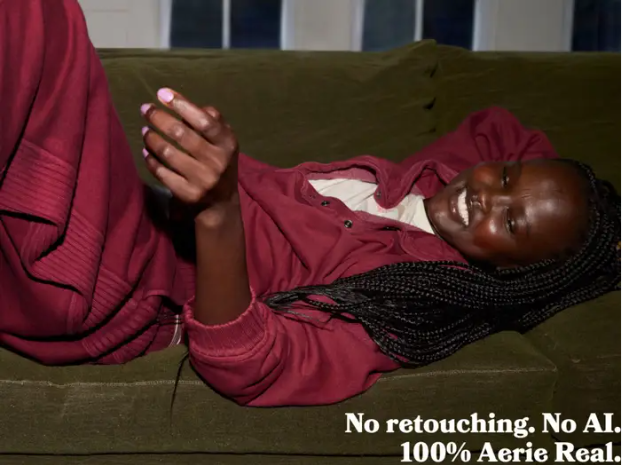
And then there seems to be a bit of a trend forming.

I think we can all agree that audiences aren't saying, 'We are only turned off by AI-generated content from big brands. Everybody else, it's fine."
This applies to YOUR business too - even small businesses.
Even before I wrote this newsletter, I saw colleagues like Geri Silver tell brands: You may think this is easy and cool, but what matters is what your consumers think.

Look at that. It looks like something out of the 1980s funny pages.
And here's the thing - AI didn't necessarily do a bad job creating it. It likely created it quickly - no need to have humans spend much time doing anything! But what message does the final product send to the humans on the other side?
That the business prioritized speed over connection?
That they're more excited about what AI can do FOR them than what their content does for their audience?
When we hear the warnings about letting AI take over too much of our thinking at work, this is a prime example.
I want you to know that this is NOT an anti-AI piece.
I use AI in my work every day as an editor, organizer, brainstorming partner, researcher (though I have to check the results), second opinion on content, and more.
But as I start 2026, my feelings about my role in an age obsessed with AI have changed.
Many businesses aren’t just figuring out where AI stops and humans start anymore. They’re being pushed to prove there’s a real human behind their content.
What does that mean for founders, leaders and businesses?
Even before AI, there were demands for a more substantial human presence in content. Now, there are even more compelling reasons to:
Seek out the most presence-based, human-first content – like videos and audio podcasts.
Learn how to feel comfortable speaking to your audience on camera or over the microphone.
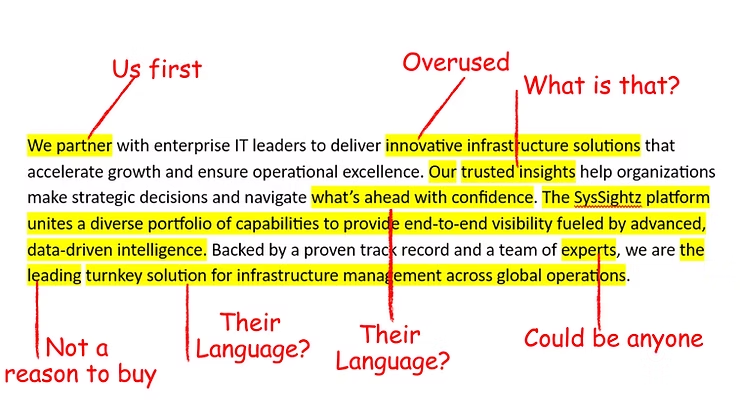
Learn how to evolve their messages/copy on platforms like LinkedIn to sound less corporate, generic, and polished – and more LIKE THEM.
It all starts with looking at content differently. It is the means by which to stand out, create a verifiable, undeniable human presence, and make a meaningful connection with the audience.
This year, the question won’t be “Is this AI?”
It will be “Was this made for me - or just made?”
Let me know if I can help you in 2026.
Want to add a humanized content session to your event? Contact me!


Comments