Why Readers Can Hear Your Copy and Why It Matters
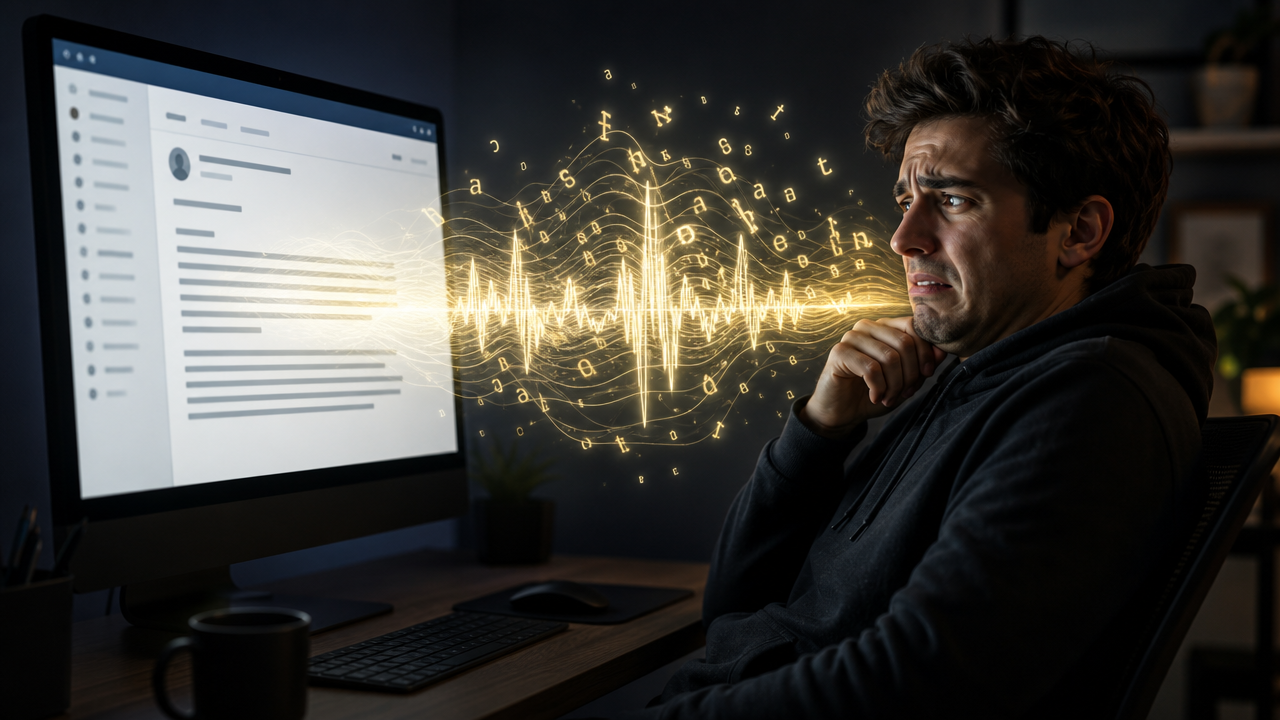
Your readers’ brains may be doing more with your copy than you realize. Even though it’s written, we still talk about its tone and how it “sounds.”
We might say an email sounds friendly or cold or dismissive. We might say something sounds conversational, corporate, or salesy, but we're still talking about something we're reading.
So where does that sound of tone come from if someone's not actually speaking?
One possible explanation is something researchers call implicit prosody.
Implicit prosody is the idea that when we read silently, our brains can assign speech-like qualities such as rhythm, stress, and intonation to the words.
So when we say something we read sounds dismissive, friendly, irritated, or salesy, suddenly the idea of it having sound isn't as strange as it seems. And there are some pretty familiar ways to think about the work our brains are doing.
Have you ever had a song stuck in your head for a long period of time?

As someone with ADD, I have one in there almost all the time, so I can relate to that. But when that happens, you're not actually hearing music, right?
Nothing is entering your ears, and yet somehow you can experience the song, the melody, the rhythm, and the singer's voice. There's a name for that too.
It’s called auditory imagery, the experience of imagining sound when no external sound is actually present. Research shows there’s some overlap between what happens in our brains when we imagine sound and when we actually hear it.
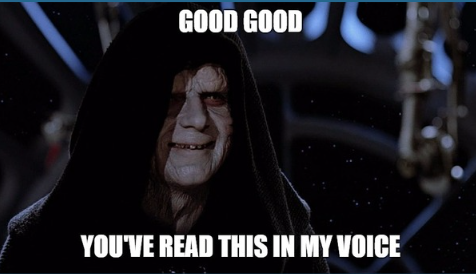
If you're a Star Wars fan like me and you've seen Return of the Jedi probably close to 1,000 times, you most certainly know the voice of Emperor Palpatine. So if you see a meme with him and read the text in his voice, that's a pretty good example of how familiarity can create that experience.
This meme proves it.
Or if you really know Return of the Jedi and have been to McDonalds...

If you know what Palpatine sounds like, it's not hard to understand how familiarity could cause you to read those words in his voice.
👉 Now why am I pointing this out?
Because I think this is something we should consider when we write copy.
Why Does Marketing Copy Sound Salesy?
Movie characters aren't the only voices we know well. We're also pretty familiar with what advertising sounds like. We've heard radio commercials, infomercials, sales pitches, and corporate marketing language.
We've been exposed to some version of that stuff over and over again for most of our lives.
"Call right now."
"Everything must go."
"No credit, no problem."
"Come on down."
"Double the offer today."
So, it is possible if you read copy that "sounds" like that, you might hear a voice similar to a TV ad, or one of those promos that interrupt your YouTube videos.
✋FULL DISCLOSURE: I have read email copy that way.
For example. When I read this opening line in an email:
"Are you tired of long turnaround times and having to work with several agencies on the same campaign? That doesn't need to be the case. With us, you'll get everything from one partner."

Is it that hard to imagine someone seeing those words and reading them with that familiar (and annoying) advertising sound or tone?
Yet, we've heard people say generic or overused marketing copy sounds salesy, selfish, or like someone is just screaming into the void hoping somebody responds.
How Do You Make Social Media Copy Sound More Human?
I once worked with someone who wanted me to help "humanize" the social media copy for an online degree program. When I saw the copy, I could see what she meant. Many of the posts were written like this:
"Are you considering going back to school to enhance your career? Explore our 100% online MBA programs designed for your success."
Hear that voice again?
The tone or ‘sound’ of the copy is part of the issue, but so is the familiar marketing and advertising language we see all the time. Fortunately, her content included video testimonials from students, and that helped humanize the new copy.
The copy came from real, conversational words from the students in the video. It was their language, not the university's marketing copy.
Why Do People Interpret the Same Message Differently?
Our minds are making quick decisions to avoid wasting time with generic, unhelpful, or misleading content. Those decisions are also shaped by bad experiences that don’t just disappear from memory.
They go with people to the next article, email, website, LinkedIn post, etc.
A few years ago, I interviewed Ethan Beute 🏡, author of Human-Centered Communication, and asked him about intent, copy, and audience interpretation. One of the things he pointed out is that when we rely on written text to communicate, we're giving away a lot of control over how our message is read.
At the same time, people try to determine the writer’s intent.
Do they believe what we're saying?
Are we aligned with them?
Is this more about helping them or me?
When they're not given all of that information, their brains fill in the gaps. Think about how that applies to AI or copy that "sounds like AI" or "sounds robotic." If someone thinks AI wrote your comment, social post, or blog, they may wonder why you did that. They could think:
"They thought they could fool me?"
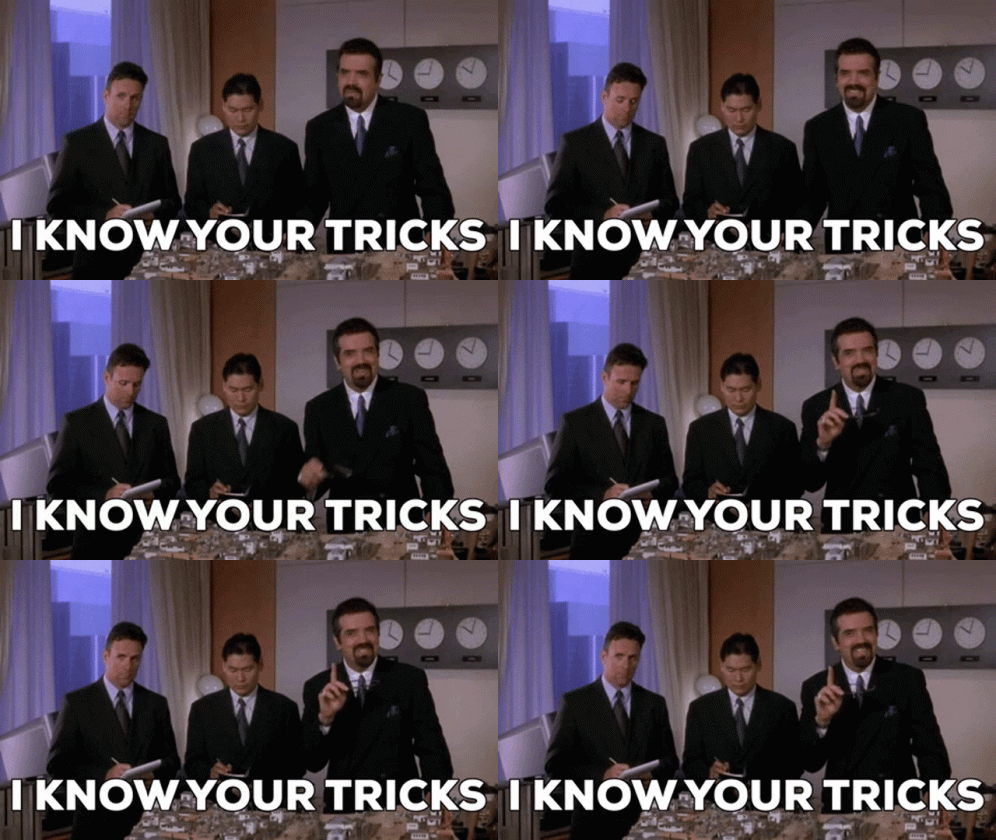
Maybe they think:
"This is about getting something posted quickly, not communicating with me."
This isn't limited to AI either. It can happen in everyday email communication. 📩
Last year, I spoke to a large group of state, local, and federal employees about the different ways words, phrases, and tones can be interpreted in copy. This includes common words we put into emails all the time.
For example, even something as simple as ending an email with "Thanks" can be interpreted differently. To one person, it's a perfectly pleasant and common closing. Someone else may see it, and then "hear" it as dismissive.
"Thanks."
If you've seen Office Space, maybe you hear a little Lumbergh in there.

Again, it's just a written word. But the brain is making it much more than that. We don't even think about that, but we should.
How Do You Write Copy Like You Talk?
Earlier, I pointed out that using actual student language helped humanize the social media copy, including the way it sounded. The key is leaning more on how people actually talk. When we do that in our copy, we're less likely to generate something that sounds bad to the audience.
Some of the most generic, long-standing, and sometimes outdated marketing language has been around for so long that it becomes automatic. So automatic, businesses may not even realize what was changing on the consumer side of things.
👉 For example, as far back as 2018, Forrester was already studying why consumers responded better when marketing copy sounded more like it came from a real person.
Combine that with how copy might sound to them, and our word choices can create problems we never intended. The puzzling part is that we would often never use this same marketing language if we were speaking to that person face to face.
Imagine walking into a coat store, and a staff member walks up and says:
"Hi, our winter collection is crafted with high-performance fabrics to ensure maximum warmth and durability in extreme weather conditions. Would you like to explore our latest offerings?"
There's probably not a real-life scenario where someone speaks to you like that. But could you see that language in an email, a social media post, or maybe a LinkedIn DM?

Everything the employee said about the coat might be accurate, but they'd probably avoid saying it that way because they know you might look at them like they have lobsters crawling out of their ears.
So the question becomes:
👉 If we're not comfortable communicating that way face to face because we know the person on the other side might be confused or put off by it, why are we so comfortable letting copy communicate that way for us?
Before You Publish, Think About What the Words Sound Like
t's not always easy to evolve from the "marketing way" of writing content, but we have no choice in 2026. If consumer attitudes were already changing in 2018 (or earlier), imagine what they are now.
The copy should look, feel, and sound like a human being on the business side is genuinely attempting to communicate, connect, and help the human on the other side.
But if we're going to change the way our audience hears or interprets our content (or what they assume about it), humanizing it starts with self-awareness. That means asking ourselves a few questions before we create the content.
But if we're going to change the way our audience hears or interprets our content (or what they assume about it), humanizing it starts with self-awareness. That means, asking ourselves a few questions before we create the content.
How will they hear or interpret our website copy (or whatever is in front of them), and what might they assume?
How would I interpret this if I were in their shoes?
Is this more like marketing or communicating?
Why are you communicating with them that way?
What has the audience already experienced that might influence how they "hear," interpret, or experience the copy?
What have they already seen from your industry?
That doesn't require us to predict every possible interpretation. But it does require us to remember that written content isn't just words we put on a page.
If you're thinking about how your own written content sounds and how it may be interpreted, I help founders and teams with written communication and messaging.
Let me know if I can help you.